
Use case · FTTx rollout
Turn every FTTx rollout into a network you can actually operate
A rollout that ends in spreadsheets, CAD files and disconnected as-built records is a rollout you can't sell from. NetworkAccess captures FTTx and FTTH builds into a trusted digital twin, so the moment fiber goes live, you know what you own, where it is, what capacity is free, and whether you can connect a customer.
Get a demo →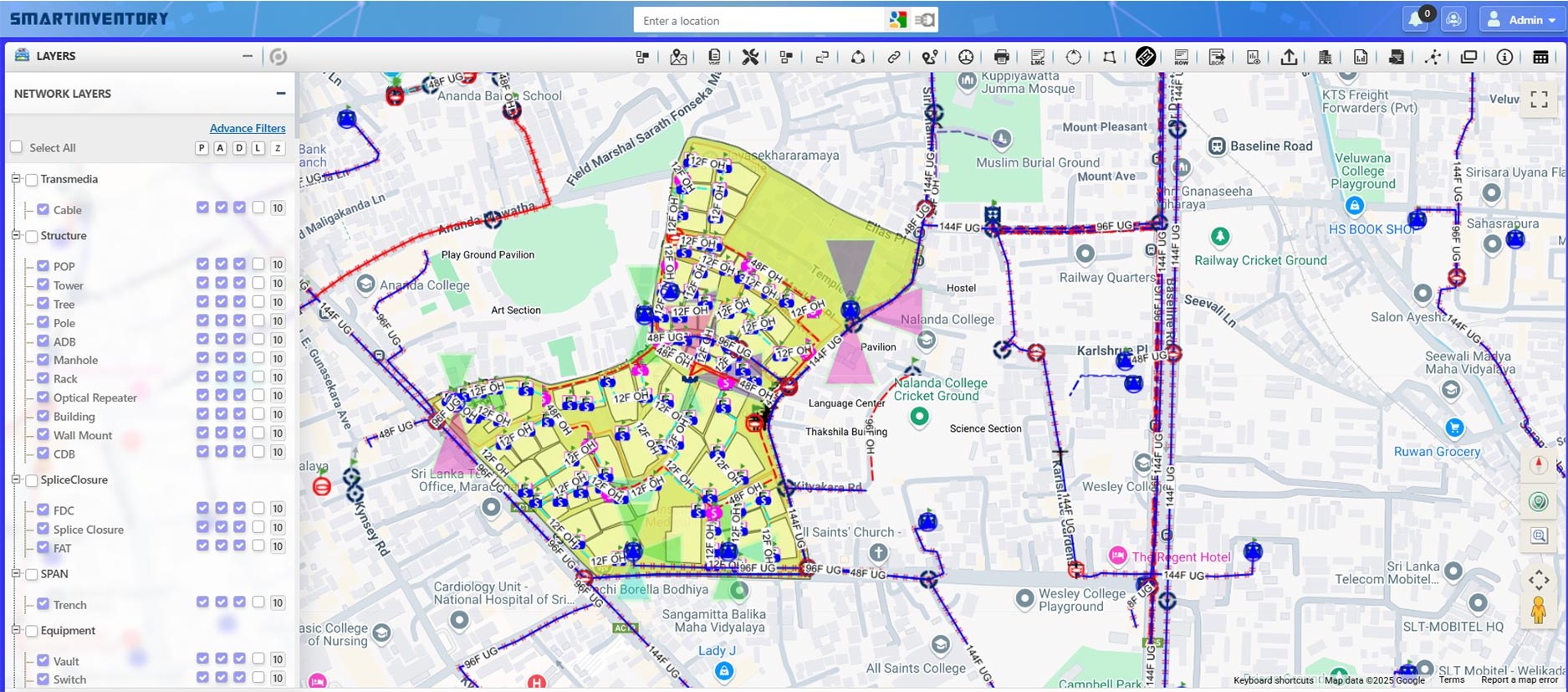
The problem
Why FTTx rollouts stall after the fiber is in the ground
The hardest part of a fiber-to-the-x build isn't laying cable, it's everything that happens to the record of that cable afterward. Large FTTH projects are usually broken down into hundreds of sub-projects for every region, each tracked across spreadsheets, paper-based maps and disconnected data sets. That fragmentation is exactly where errors and project delays creep in, and it's the reason an operator can finish a phase yet still not know, with confidence, what it can sell.
Most of the cabling in question is the part that matters most commercially: the subscriber loop, the "last mile" that connects the end user to the system, is the bulk of the access network. FTTx is the push to bring fiber to the home, premises, curb or node and offer high-bandwidth services that copper can't. If the as-built reality of that last mile lives in CAD files and a planner's memory instead of a trusted system of record, the rollout is finished on paper but unusable in operations.
The approach
From routes in the ground to a network you can run
The build doesn't just get designed, it gets captured
NetworkAccess is built operations-first, not GIS-first: it starts with inventory, serviceability, capacity and operations workflows, and treats the map as the interface rather than the product.
For an FTTx rollout, that means routes drawn across a territory resolve into a single trusted digital twin you can expand, sell and operate from, not a CAD file someone has to interpret later.
What gets captured
Capture the build into a trusted digital twin
NetworkAccess is built specifically for fiber, with first-class support out of the box for the assets an FTTx network is actually made of: fiber cables, ducts, joints, splitters, OLTs, ONTs, routes and capacity tracking, no extensive customization required. As each sub-project completes, its as-built inventory lands in one place instead of scattering across regional spreadsheets. The objects that define an FTTx build map directly onto the platform:
- 01
Routes, ducts and poles
The physical path the fiber takes, captured as it's built.
- 02
Splitters, joints and access points
The passive plant that determines how many homes a feeder can serve.
- 03
OLTs and ONTs
The active equipment at each end of the PON, where home-pass counts and capacity get real.
- 04
Service areas
Feeder, Distribution and Customer Service Areas (FSAs, DSAs, CSAs) that define which premises a given strand of the rollout actually reaches.
Because FTTH is dominated by passive optical networks, where a single fiber from the central office is typically shared across up to 32 customers via a splitter, getting splitter and capacity records right is what separates a sellable home-pass from a guess. NetworkAccess holds that detail as live inventory, not a static drawing.
The rollout, planned on the real network. Not in a spreadsheet.
Every route, splitter and home passed lands in the same trusted digital twin the moment it's built. The phase you just finished is the network you sell from next.
The outcome
What an FTTx build delivers on NetworkAccess
The same capture discipline that makes a rollout operable also moves the numbers operators measure: inventory accuracy, serviceability speed, reconciliation effort and how fully the network you built gets used.
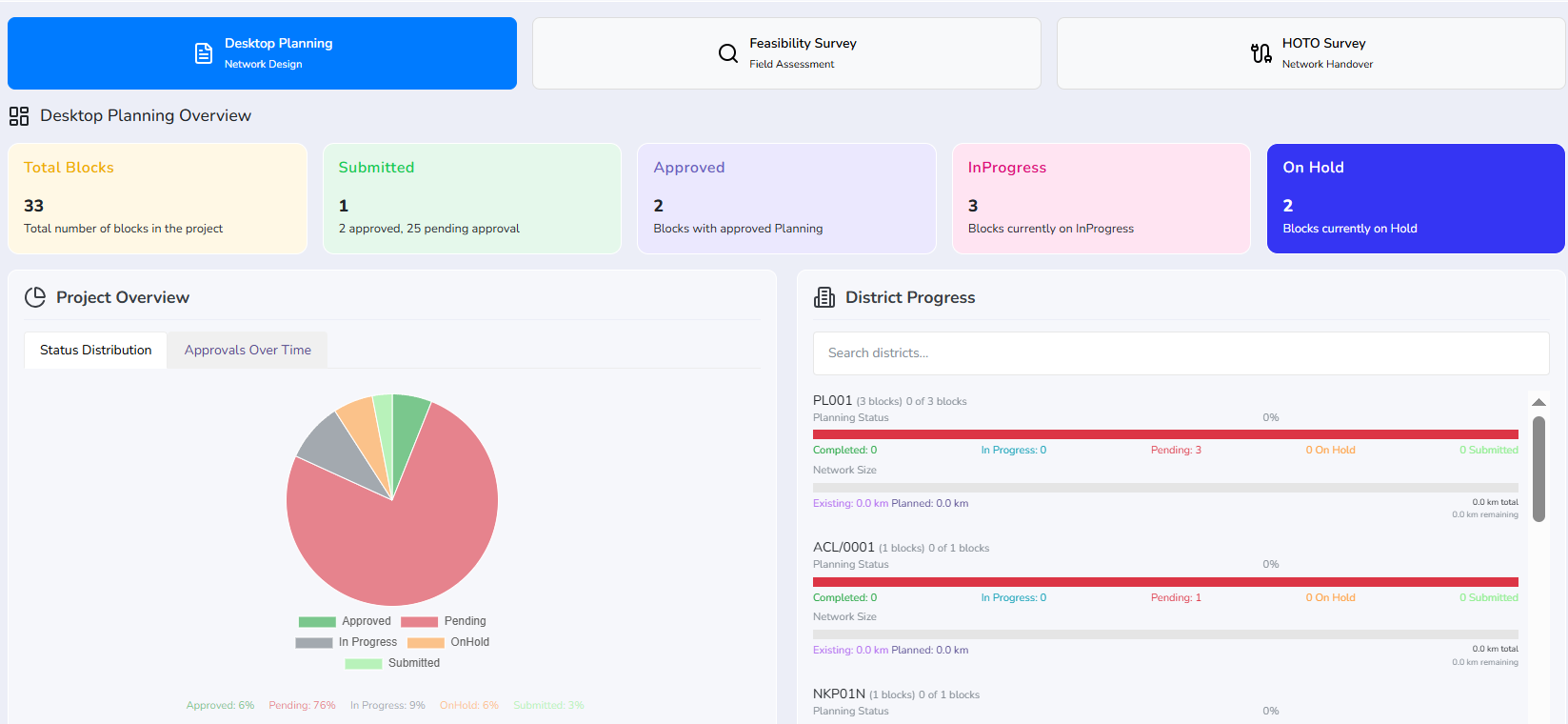
What capturing the rollout changes
- 01
Serviceable the moment it goes live
Once a phase is captured, sales and operations see real-time fiber paths, available ports and free capacity, and answer "can we connect this customer?" against the network you just built. Newly passed premises convert into orders instead of sitting in a backlog while someone reconciles the as-builts.
- 02
Accuracy that holds as you scale
FTTx programs don't finish; they roll from circle to circle and phase to phase. NetworkAccess unifies GIS, inventory tools, Excel, CRM and OSS into one operational platform, so each phase adds to one accurate picture instead of spawning another disagreeing dataset.
- 03
Less capex, fewer truck rolls
Cleaner records mean fewer truck rolls to "go and check," and underpin a 10–20% reduction in unnecessary expansion capex, because you build into what you actually have. Labor is the dominant cost in fiber deployment, so every rework avoided is disproportionately expensive rework avoided.
- 04
One platform, full lifecycle
Capture the as-built inventory, expose serviceability and capacity, and run the day-to-day operations, provisioning, dispatch, fault isolation and restoration, against the same trusted digital twin. There's no hand-off from a planning tool to an "operations" system that never quite agrees with it.
Proof
Proven across nationwide fiber rollouts
The same engine supports inventory management and operational visibility across some of the world's largest fiber and telecom networks, managing millions of network assets and nationwide fiber rollouts across multiple operators. Migration doesn't have to be a big-bang risk: NetworkAccess typically starts with one region, network layer or use case and expands progressively, so an FTTx program can adopt it phase by phase as it scales.
- Vodafone
- Reliance Jio
- BSNL
- Tata Play Fiber
- Dialog
Make your next FTTx phase serviceable on day one.
Walk through how NetworkAccess turns a rollout into a live, operable network, on your circles, with your data.
Get a demo →